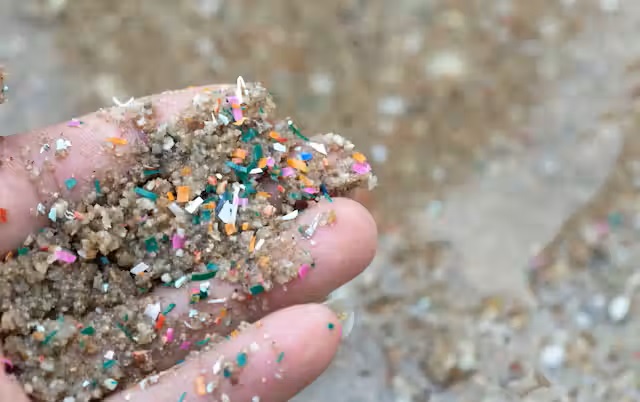
Marine plastic pollution is a massive environmental issue, with a plastic smog of an estimated 170 trillion particles afloat in the world’s oceans. This highlights how urgently we need to develop strategies to mitigate this environmental crisis.
We know some microbes can break down certain plastics, but our new study finds no clear correlation between plastic pollution levels and the production of plastic-degrading enzymes by marine microorganisms.
To address this issue, we need to understand the varying properties and environmental impacts of different types of plastic.
Most plastics are not degradable
There are four main types of plastics: biodegradable, bio-based, fossil-based and non-biodegradable. The terms can be confusing and lead to misunderstandings about their environmental impact.
Biodegradable plastics can break down naturally through the action of living organisms such as bacteria. They are made from renewable sources such as corn starch or sugar cane and don’t linger in the environment for long periods. Examples of biodegradable plastics are polycaprolactone (PCL), polylactic acid (PLA) and polyhydroxybutyrate (PHB).
Bio-based plastics are also derived from natural materials such as plants. These plastics include polyethylene terephthalate (PET), which is widely used for clothing and containers for liquids and food. However, while PET can be made from renewable sources, most of its production is derived from fossil fuels.
Fossil-based plastics are made from oil and gas. They include common types like polyethylene (PE), which is used for single-use food packaging, and polyvinyl chloride (PVC), commonly used for water pipes and wire insulation.
These plastics are generally not biodegradable. They do not decompose naturally and can persist in the environment for centuries, contributing significantly to pollution and global warming.

PE is the most manufactured plastic type in the world. It accounts for 103.9 million metric tonnes (mmt) per year, followed by PET (65.4 mmt) and PVC (50.5 mmt). However, globally only 9% of all plastic waste is recycled.
According to Plastics NZ, terms such as “bioplastic”, “biopolymer”, “bio-based” and “biodegradable” are being used interchangeably, even though they signify entirely different things.
Ocean microbes cannot break down plastics
Our study analysed genetic information from microorganisms in the ocean, using data from hundreds of water samples collected during expeditions.
This provided us with insights about the genes marine bacteria use to make enzymes, including the one they use to degrade some plastics. We can then track which enzymes these microbes use at any given time.
The idea is that if marine microorganisms are breaking down plastics, they have to produce the enzymes capable of doing it. Therefore, if microbes are biodegrading plastics in our oceans, locations with more plastic pollution should have higher levels of enzymes for plastic degradation.

Our study found no clear global connection between plastic pollution levels in the ocean and the enzymes produced by marine microbes to degrade plastics. This suggests the ocean microbiome hasn’t evolved efficient mechanisms to break down various types of plastic.
There are several reasons for this. Plastics are very different and complex. Each type of plastic has its own structure and properties, and microbes might not have had enough time or pressure to evolve special enzymes for each type.
Environmental conditions such as temperature, currents and nutrient availability could also play a role in influencing microbial plastic degradation.

Overall, our findings suggest the global ocean microbiome has not yet evolved to efficiently degrade the many types of plastic pollution plaguing marine ecosystems. This highlights the ongoing danger plastic pollution poses for marine environments.
Developing solutions will likely require dramatically reducing new plastic waste, recovering existing ocean plastic and shifting to biodegradable plastic types.
While disappointing from an environmental remediation perspective, the lack of widespread microbial plastic degradation confirms the durability of synthetic polymers and highlights the vast challenge we face to clean up the oceans.